RMT to hold protest against workplace violence

RMT to hold protest against workplace violence on London Underground
London Underground union RMT will be holding a demonstration tomorrow outside Transport for London’s offices as part of its campaign to highlight the company’s continuous failure to take proper steps to address the issue of workplace violence faced by London Underground station grade members.

The protest will take place on Tuesday 21st January 2020 between 13.30-15.30 to coincide with the next meeting of the LUL Workplace Violence Group at Palestra House, 197 Blackfriars Road, London SE1 8NJ.

Justice for Station and Revenue Staff

Dear colleague

JUSTICE FOR STATION AND REVENUE STAFF

RMT has launched a campaign to achieve Justice for Station and Revenue Staff at London Underground as the company tries to bulldoze through plans to undermine revenue grades by introducing a new grade on inferior terms and conditions and over its continuous failure to take proper steps to address the issue of workplace violence faced by all LU station grade members.

Staff Our Stations: reps campaigning meeting

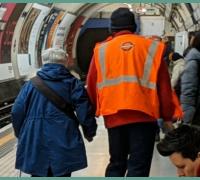
A station worker assists a passenger

REMINDER - Staff our Stations - Reps Campaigning Meeting - Thursday 16th January 

Dear colleague,

As part of the Staff Our Stations campaign, the NEC has instructed me to arrange a high profile meeting of station staff reps including Tier 2 and Health and Safety reps and branches that represent station staff.

Violence and assaults against rail workers and members is soaring. Despite this, station staffing is under increasing attack from the private train companies which are attempting to close ticket offices and cut hours and staffing at stations.

Bakerloo News: Fight for free trade unions!

The Tory government elected on 12 December has announced plans to ban all-out strikes in the transport industry. They plan to introduce new laws that would impose a “minimum service
requirement” during transport strikes. Although the detail of how this would work has yet to be drawn up, in other countries where such laws exist, they usually mean that unions and employers agree between them that a certain number of workers will work through a strike to guarantee the minimum service level is met.